One on One
Winner of the Best Director Prize at the 53rd Cannes Film Festival: Edward Yang talks about Taiwan politics, his films and the future.
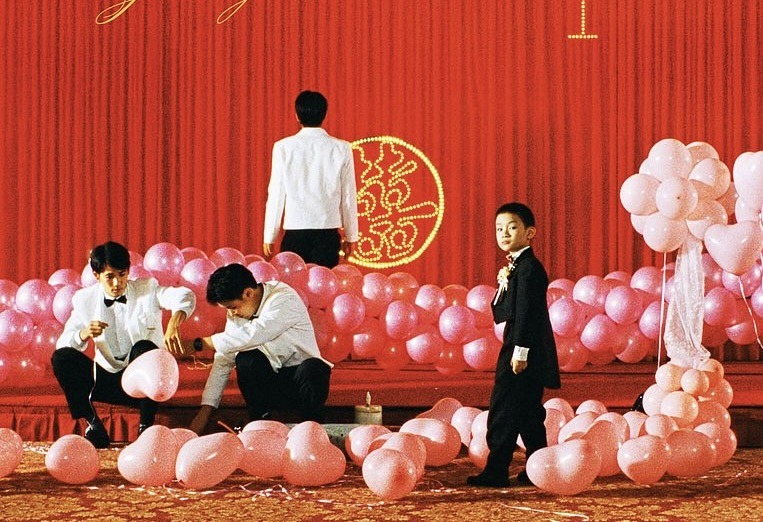
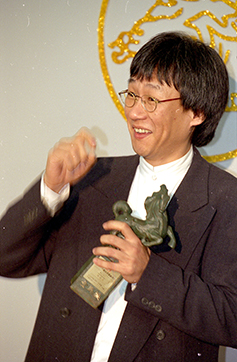
Winner of the Best Director Prize in the recent 53rd Cannes Film Festival, Edward Yang's new film A One and a Two (Yi Yi) reveals him as Taiwan's most intellectual director. He talks to film critic and Viennale Festival programmer Andreas Ungerboeck about Taiwan politics, his films and the future.
Why did you decide to use a much softer tone in your new film, compared to the rather bleak ones like A Confucian Confusion and Mahjong or other recent Taiwanese films like The Hole?
Looking back, I would say that the past two years in Taiwan were a rather bleak period, with a lot of confusion. While the whole world praised Taiwan as a great improving democracy, we – the residents – felt like we were completely going backwards, and I think that the many negative things you see in recent Taiwanese films reflect that. Everybody seemed to have lost his sense of humor. There were so many contradictions.
What do you think about the new government? Will things get better?
I am very happy the elections turned out this way, that the opposition party will form the new government. It's a sign of hope after everything that happened in the past two years. I think things will definitely improve.
Are you permanently living in Taipei?
Well, let's say, half of the year, the other half – as usual in this line of profession – you are forced to travel, to Hongkong, to Tokyo, to all the film places. Film business has become very regional, there is no national film business anymore, except for maybe India. Coming back to your earlier question … when I watch the news and see all these atrocities in the wars in Ethiopia and Sierra Leone and so on, I keep thinking: why is it that democracy brings along such awful things and how come democracy only serves so few people's power play?
Taiwan is a very good example. Three years ago, I was asked to direct a play in Hongkong, about the 1997 issue, and I decided to do it as a comedy. I said, if the Chinese leaders understood democracy they'd convert to it the next day because definitely they would be elected, because the people don't even know the opposition leaders.
I never can really judge how serious the situation is between Taiwan and Mainland China. From a distance, it seems very dangerous.
You're right. I think for Taiwanese people, although they don't show it on the outside, it is one of the issues they are most concerned about. Whenever you think about your own or the country's future there's always this big question in front of you. I think the new government will do a much better job than the old one and find more direct contact with Mainland China. That will at least solve most of the misunderstandings. If they don't manage, then we'll all be just poker chips in a cruel game. Like I said before, this is also a power play played by only a few players. That's the danger.
You had all these radio broadcasts in A Brighter Summer Day talking about „taking back the mainland." Is that still an issue?
No, no, that was in the '50s. Nowadays, we are doing business with them (laughs). Economy rules, right? More than ever before, I think that now, as we are entering the 21st century, the world is splitting into two halves: One is the educated urbane population who uses computer and the other is a rural, less educated population, and the gap is widening very very quickly. But even in this first group there's a gap. Now, here in Cannes, there are maybe 50,000 people attending who think they are important. But what is 50,000 if you think about it as hits on a website? It's nothing.
Cannes in these days of global information seems like the good old days …
Exactly. Look at all this e-commerce, and it's only starting. Who needs a thing like Cannes in the future? Filmmaking and film business will become a very regional, urbane matter run by a few clever people. I tell you I go to Tokyo more often than I go out of Taipei. And I think it's the same for people in Japan or China. I think I have more in common with this first half in Japan than with my own Taiwanese second half, and vice versa. It's not because we are westernized. Many Europeans have this wrong impression that all we Asians want is to become westernized. We are urbanizing. That culture is becoming more and more similar, and the countryside is becoming more and more like a strange planet.
Is the friendship between NJ and Mr. Ota, the Japanese businessman in Yi Yi, an example of this development?
Yes, in a lot of ways. Of course, it's also very ironic because you probably won't meet a Japanese businessman like that in all your life. And there's this historic connection between Taiwan and Japan. A Japanese city for me basically represents my childhood. When we grew up, Taipei was a Japanese-built city. So when I first came to Japan, I was so moved because everything reminded me of my childhood. I think that's the feeling NJ and his first love have when they come to Japan. And then, there is this seaside resort which is called Atami. It used to be the most popular place in the late '60s, early '70s. Now it's like a ghost town. Nobody goes there anymore. That's one of the reasons I chose this Japanese businessman – to bring back the characters to their youth, to their memories, like they are walking through a time tunnel.
Speaking of the seaside, somebody mentioned in a review that the film reminds him of That Day at the Beach, with tragedy striking and the main character looking back on his life. Did you have something like that in mind?
There's a point to this, but I certainly didn't do it consciously. Of course, the seaside resort might strike you as a reference to my first film. When you go to Atami, it's like, Jesus, this is the '60s. It's like this place has stopped in time, like it has not progressed in time. That's what interested me, this strange place that brings about all these memories.
I know that family is a very important issue in Chinese society. Now that we've seen so many Chinese films showing the family as crumbling and defunct – does it mean that the concept of the big family is outdated? Or is that just a consequence of urbanization?
Even family has its own problems. I think you have to tell all aspects of a story to make it convincing, so I didn't want to downplay these problems and dark sides. I know people might be disturbed but that's the way families are and we have to face reality.
I think people might be offended by the fact that the boy does not have anything to say to his grandmother.
Yes, but that's the situation as I see it. When I first had the idea for the film, it happened that a friend's father was hit by a car and he was in a coma. After a while, the hospital sent him back to the family because they didn't want him to occupy a bed. I went to visit them and the doctor was there and told them to talk to the father and to treat him like a normal person. That brings tremendous stress to the family. How do you do that? You have to tell the truth. You can't lie to him. If he were his usual self, you'd probably lie to him every now and then, but now that he is in this condition, you can't do that. And let's face it: When we have to be honest, we have a lot of problems.
Where did this idea of the boy photographing the backs of other people's heads, of the „things we cannot see," come from?
Basically, I think that's what artists, what filmmakers do. We try to show people the other half, the one they don't see of themselves. That's our job, like the little boy thinks it's his job.
Looking back on one's own life, like in your first film and now in this one, do you think it is something that helps us or does it just make us sad about having missed so many opportunities …
I think we all do it. It's a very universal thing and that's what I wanted to have when I started writing it, although it may not look the same for a family from the countryside. This one is a very urban story.
But there's this other concept, people who say: Never look back, just look ahead to the future. Do you think it's possible to forget about the past?
No, I don't think so. To understand the future, you have to examine your past very carefully. When you explore something, you always start from where you are. I mean, nobody has landed here on a helicopter, from no man's land. We all come from somewhere and we better never forget about where we are coming from.
Especially after your earlier films you have been compared to all kinds of European filmmakers, from Antonioni to Fassbinder. Were they the people who influenced you?
I don't think influence is that important. For me, every creator is like the boy in the film. We start thinking about questions and we don't accept other people's answers. We want to find our own answers for our questions. I guess that's what's wrong with film schools in many cases, because at film schools you are taught to refer everything to existing work. I think filmmaking is much more related to your own life and to your own experience than to the fictional life created by others.
What is your special relationship with Wu Nien-jen, the famous screenwriter, who is the leading actor in Yi Yi?
I've known him for such a long time, when we started out to create the „Taiwan New Wave" (laughs). We are such good friends. For me, he's the best actor in Taiwan, no question about it. When I proposed this project to the producers, I said they better make sure he has time to do it, otherwise I wouldn't even bother writing it. He is such a busy guy, but he was interested, and I knew it would all work out. He's the only guy who can play such a difficult part. It requires so much understanding. An actor might only use his technique. But Wu Nien-jen has all the feelings I wanted to have for this part.
Das Interview erschien im Popkultur-Magazin „BigO" in Singapur im August 2000.